
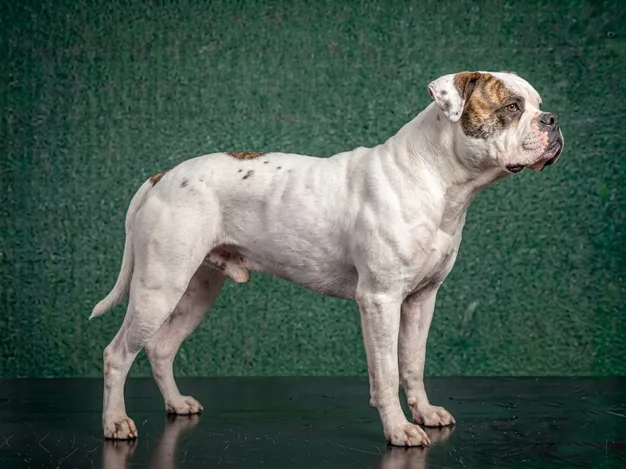
Dog Breed Info & Overview
Breed History
The American Bulldog descends from working bulldogs brought to North America by settlers, where they helped on farms as catch dogs, guardians, and all-purpose workers. The breed survived through rural use, especially in the southern United States. Modern lines preserve athleticism, courage, and strong family loyalty.
Characteristics
The American Bulldog is muscular, broad-headed, and athletic, with a short coat and powerful frame. It is more agile than many expect and needs exercise to stay balanced. This breed can be protective, playful, and people-oriented. Training and socialization are essential because strength develops quickly.
Temperament
American Bulldogs are loyal, confident, affectionate, and often protective. They usually love family attention and enjoy active play. Around strangers and other animals, early socialization matters. They respond best to calm consistency, positive reinforcement, and owners who set clear expectations before problems develop.
Personality
This breed has a bold but loving personality. Many American Bulldogs act like oversized lap dogs with family, then become watchful when something feels unusual. They enjoy games, tug, walks, and structured tasks. Without engagement, their strength and enthusiasm can turn into jumping, pulling, or chewing.
Physical Characteristics
The American Bulldog has a strong neck, broad chest, muscular shoulders, and a short smooth coat that is often white with patches. Body type varies from lean and athletic to heavier and more substantial. A confident stance, powerful jaws, and expressive face reflect its working background.
Health Issues
American Bulldogs may be prone to hip and elbow dysplasia, allergies, skin infections, eye issues, thyroid problems, breathing concerns in some lines, and weight gain. Regular vet care, lean muscle, proper exercise, quality food, and responsible breeding help support long-term comfort.
Right For You?
The American Bulldog is right for owners who want a loyal, athletic companion and can provide daily structure. It is not ideal for people who cannot manage strength or skip socialization. With training, exercise, and affection, this breed can become a dependable family protector.
Frequently Asked Questions
Q1. Is the American Bulldog a good family dog for active homes with children and consistent daily rules?
Ans. Yes, the American Bulldog can be a loving family dog when trained and socialized well. It is affectionate and playful, but its strength means supervision around children is important. Families should teach polite greetings, leash manners, and calm play from an early age.
Q2. How much grooming does an American Bulldog need with its short coat and moderate shedding weekly?
Ans. Grooming is simple compared with long-coated breeds. Weekly brushing helps control shedding and keeps the coat healthy. Owners should also clean skin folds if present, trim nails, check ears, and maintain dental care. Skin allergies may require extra attention in some dogs.
Q3. Can an American Bulldog live in an apartment if it gets enough exercise and training each day?
Ans. It can work in an apartment only with a committed owner who provides exercise, training, and mental outlets. The breed is strong and active, so space helps. Without enough activity, it may bark, jump, pull, chew, or become difficult in tight living conditions.
Q4. Is the American Bulldog easy to train for first-time owners who want a loyal protective companion?
Ans. Training is possible, but first-time owners should be prepared for strength and confidence. American Bulldogs need consistency, positive reinforcement, and early boundaries. Professional guidance can help. They are eager with trusted people, but weak rules may lead to pushy behavior.
Q5. What health problems should American Bulldog owners watch for from puppyhood through senior years?
Ans. Owners should monitor hips, elbows, skin, allergies, eyes, thyroid health, breathing comfort, and weight. Choosing a responsible breeder, keeping the dog lean, feeding measured meals, and scheduling regular vet checks help reduce risks and support an active life.