
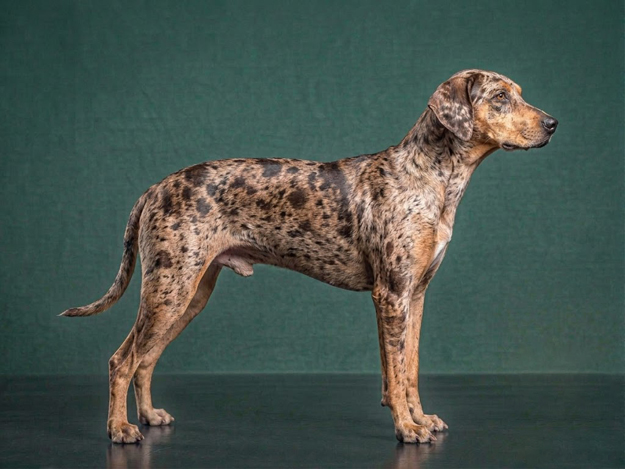
Dog Breed Info & Overview
Breed History
The American Leopard Hound is one of North America’s older treeing hound types, shaped by frontier hunters who needed a tough dog for varied terrain and game. Its ancestry likely blends Spanish, French, and native hound influences. Over generations, selection favored tracking ability, intelligence, endurance, and a dependable working bond.
Characteristics
The American Leopard Hound is athletic, alert, and built for scent work over long distances. Its spotted or leopard-pattern coat gives it a memorable look, but its real strength is working ability. This breed needs activity, secure boundaries, and mental tasks. It is happiest when its nose and body have a purpose.
Temperament
American Leopard Hounds are loyal with family and often confident in the field. They can be vocal, determined, and independent when tracking, so training should begin early. They usually respond well to fair handling and clear routines. Socialization helps them remain steady around strangers, livestock, and other dogs.
Personality
This breed combines a hardworking outdoor spirit with a surprisingly affectionate home side. Many American Leopard Hounds enjoy being close to their people after exercise, but they dislike boredom. They need room to explore, tasks to solve, and owners who appreciate classic hound voice, stamina, and problem-solving instincts.
Physical Characteristics
The American Leopard Hound has a strong, agile frame, deep chest, muscular legs, and short coat that may show leopard spotting in several colors. Its ears are medium to long, and the expression is alert and intelligent. The breed is built for endurance, treeing work, and quick movement across uneven ground.
Health Issues
American Leopard Hounds are generally sturdy, but owners should watch for hip issues, ear infections, eye concerns, injuries from hunting, and weight gain. Routine ear checks, tick prevention, lean conditioning, safe exercise, and regular veterinary care are important. Working dogs also need recovery time after demanding days.
Right For You?
The American Leopard Hound is right for hunters, hikers, rural families, and owners who enjoy training. It is not ideal for quiet apartment living or homes that dislike barking and prey drive. With exercise, secure fencing, and consistent guidance, it can become a loyal worker and affectionate companion.
Frequently Asked Questions
Q1. Is the American Leopard Hound a good family dog for active rural homes with outdoor experience?
Ans. Yes, it can be a devoted family dog when given exercise, training, and space. It often bonds strongly with its people and enjoys being part of daily routines. Because it is a working hound, families should expect vocal behavior, scent focus, and a need for secure boundaries.
Q2. Can an American Leopard Hound live in an apartment if it gets long walks and regular outdoor activity?
Ans. Apartment life is usually not the best match. This breed needs room, scent work, and vigorous exercise to stay balanced. Long walks help, but they may not replace tracking games, running, or field time. Without enough activity, barking, restlessness, and destructive behavior can develop.
Q3. How much exercise does an American Leopard Hound need to stay calm, fit, and manageable every day?
Ans. Most need at least 60 to 90 minutes of meaningful daily exercise, with additional mental work. Hiking, tracking, hunting, scent games, and structured play are excellent outlets. A short neighborhood walk is rarely enough for a young or working American Leopard Hound.
Q4. Is the American Leopard Hound easy to train compared with other independent scent hound breeds?
Ans. It is intelligent and capable, but it can be independent when scent takes over. Training works best with rewards, repetition, recall practice, and calm consistency. Owners should make lessons practical and engaging. Harsh methods can reduce trust, while weak rules may invite selective listening.
Q5. Does the American Leopard Hound have a strong prey drive around cats, small pets, and wildlife outdoors?
Ans. Yes, many have strong prey drive because of their hunting background. Early socialization may help, but owners should still supervise carefully around cats and small pets. Secure fencing, leash control, and reliable recall training are important whenever wildlife or livestock may be nearby.