
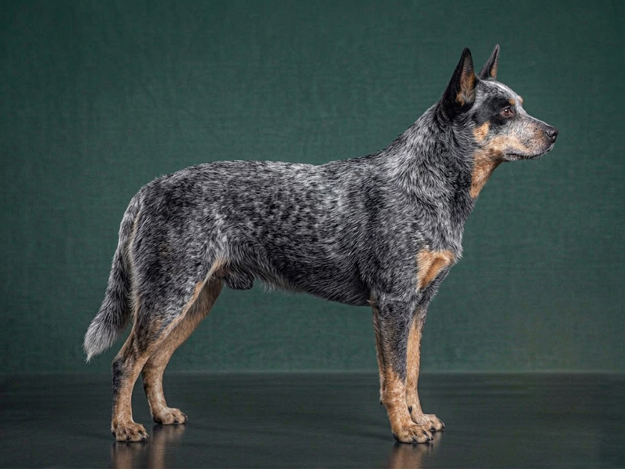
Dog Breed Info & Overview
Breed History
The Australian Cattle Dog was developed in Australia to move cattle across harsh, open country. Breeders combined imported herding dogs with hardy local influences, including the dingo, to create a tough worker with stamina and bite. The breed’s history explains its resilience, intelligence, and intense commitment to tasks.
Characteristics
The Australian Cattle Dog is compact, muscular, and built for endurance. It is known for problem-solving, loyalty, agility, and strong herding drive. This breed needs hard exercise and mental work every day. It excels in ranching, obedience, agility, scent work, and active homes that provide clear rules.
Temperament
Australian Cattle Dogs are alert, loyal, bold, and often reserved with strangers. They can be deeply devoted to one person or family and may try to control movement through nipping or herding. Early training and socialization are essential. They respect confident, fair owners who stay consistent.
Personality
This breed has a serious, work-first personality with surprising affection for trusted people. It enjoys solving problems, learning routines, and staying busy. A tired Cattle Dog can be calm and loyal indoors, but an underworked one may bark, chew, chase, or become obsessive. Purpose is the key to balance.
Physical Characteristics
The Australian Cattle Dog has a strong medium body, broad head, pricked ears, and weather-resistant double coat. Coat colors include blue or red speckle, often with markings. Its build is compact yet powerful, designed for quick turns, long days, and controlled movement around livestock in demanding conditions.
Health Issues
Australian Cattle Dogs may face deafness, progressive retinal atrophy, hip dysplasia, elbow issues, and joint strain from intense activity. Responsible breeders screen carefully. Owners should support lean weight, safe conditioning, eye and hearing checks, dental care, and regular veterinary visits throughout life.
Right For You?
The Australian Cattle Dog is right for people who enjoy training and active routines. It is not ideal for low-energy homes or owners who dislike structure. With exercise, socialization, and work, it becomes a loyal, brilliant companion. Without those outlets, its intelligence and intensity can create problems.
Frequently Asked Questions
Q1. Is the Australian Cattle Dog a good family dog for active homes with training and outdoor routines?
Ans. Yes, it can be a loyal family dog in active homes that understand herding breeds. It needs exercise, training, and supervision around small children because it may nip or herd moving feet. Families who provide structure usually enjoy its devotion and intelligence.
Q2. Can an Australian Cattle Dog live in an apartment if it receives enough exercise and mental work?
Ans. Apartment life is possible for exceptional owners, but it is challenging. This breed needs intense activity, training, and problem-solving every day. Without enough work, it may bark, chew, pace, or become controlling. Access to outdoor exercise and dog sports helps greatly.
Q3. How much exercise does an Australian Cattle Dog need to stay calm, healthy, and well behaved daily?
Ans. Most need at least 90 minutes of vigorous daily activity, plus mental challenges. Running, hiking, agility, herding, obedience, fetch, and puzzle work are useful outlets. Physical exercise alone is not enough; the breed also needs tasks that make it think.
Q4. Is the Australian Cattle Dog easy to train for first-time owners who want a smart working companion?
Ans. It learns quickly, but it can be intense for first-time owners. The breed may test boundaries and needs consistent leadership. Positive training, early socialization, impulse-control games, and daily practice work best. Owners should enjoy training, not treat it as optional.
Q5. What health problems should Australian Cattle Dog owners watch for throughout the dog’s life?
Ans. Owners should watch for deafness, progressive retinal atrophy, hip and elbow problems, dental disease, and injuries from hard activity. Health-tested breeding, hearing and eye checks, lean weight, safe exercise, and routine veterinary care help protect long-term quality of life.