
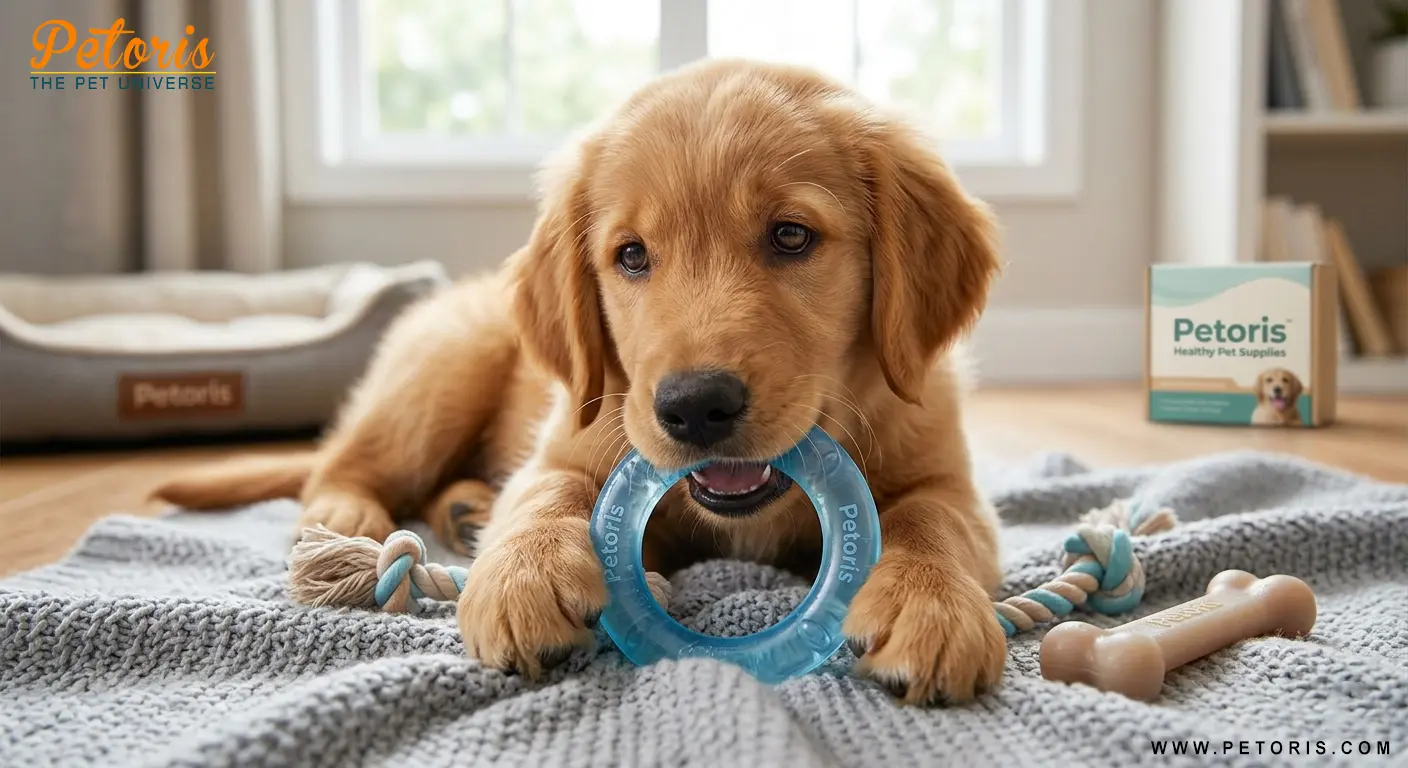
What Actually Happens During Teething?
Puppy teething is simply the process of losing temporary "milk" teeth to make room for permanent adult teeth. Because this transition can be uncomfortable or even painful, your puppy will instinctively chew, bite, and act irritable to find relief.
The Teething Timeline: What to Expect
Knowing what to look for can help you stay ahead of the chaos:
-
2–4 Weeks: Their 28 milk teeth begin to appear.
-
3–4 Months: The most challenging phase begins. Milk teeth start falling out, and your puppy’s gums will likely become sore and itchy.
-
4–6 Months: Adult teeth begin to erupt. You might notice mild redness or even tiny spots of blood on their toys.
-
6–7 Months: Teething usually wraps up once all 42 adult teeth have fully developed.
How to Manage the "Biting" Phase
First, a quick reassurance: In almost every case, your puppy is not being aggressive. They are simply using their mouths to explore the world and relieve gum pressure.
To manage this behavior, try these professional tips:
-
Redirect, Don't Punish: When your puppy bites, say a firm "Ouch," stop interacting for a moment, and immediately offer a dedicated chew toy.
-
Offer Cold Relief: To soothe inflamed gums, try using refrigerated (not frozen) chew toys. Please avoid giving your puppy ice cubes or frozen bones, as these can cause dental damage.
-
Puppy-Proof Your Space: Prevention is your best friend. Keep shoes, wires, and delicate items out of reach, and use bitter-taste deterrents on furniture if necessary.
-
Adjust Their Meals: If your puppy is struggling to eat, try softening their dry food with a little warm water to make it easier on their sore gums.
Important Safety Warnings
Never give your puppy items that can splinter or cause injury, such as cooked bones, hard plastic, or old shoes (which teach them that it’s okay to chew footwear). Also, please refrain from using human painkillers or gels, as these can be toxic to dogs.
When Should You Call the Vet?
While some discomfort is normal, reach out to your veterinarian if you notice:
-
Severe or persistent bleeding.
-
A swollen face or jaw.
-
A total refusal to eat for more than 24–48 hours.
-
"Retained" baby teeth that refuse to fall out even as adult teeth appear.
A Note for Pet Parents in India
Given our climate, remember that heat can often worsen gum inflammation. Keep your puppy well-hydrated, avoid letting them chew on outdoor objects like stones or sticks, and always stick to vet-approved oral hygiene products.
Final Thought: This phase is temporary, but the habits you build today are permanent. Stay patient, keep your redirection consistent, and remember that with a little extra care, your puppy will sail through this phase in no time.
Planning to expand your furry family? Always prioritize health and early socialization by choosing a responsibly raised puppy from a trusted breeder.